
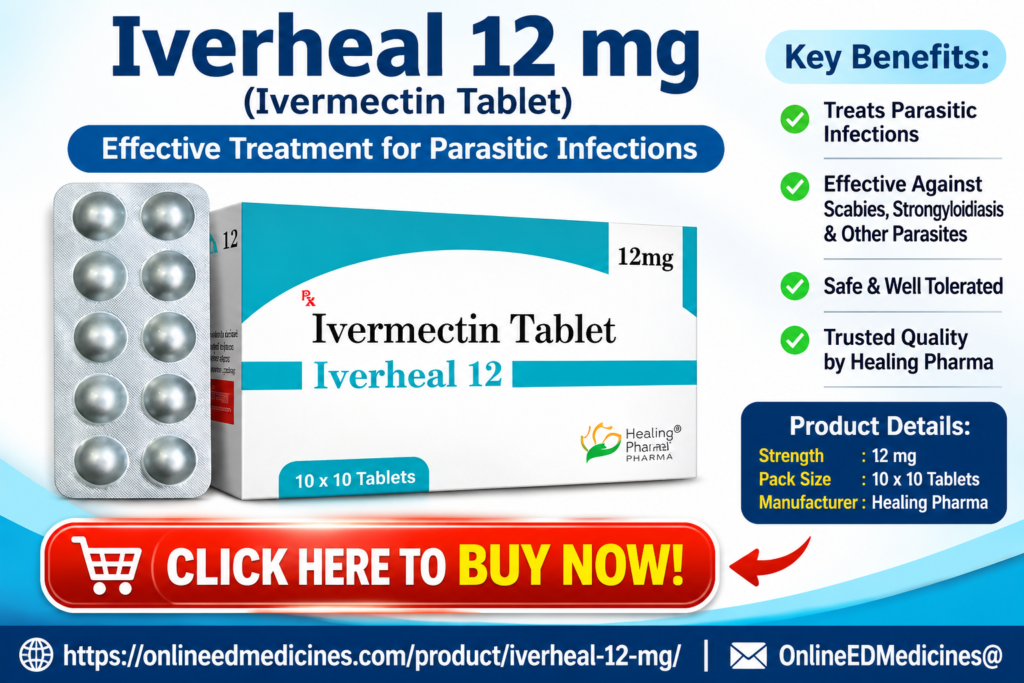
What Is Iverheal 12 Ivermectin?
Iverheal 12 is marketed as a tablet containing 12 mg of ivermectin. Ivermectin belongs to a class of medicines known as antiparasitic agents.
It works by interfering with nerve and muscle functions in susceptible parasites, helping eliminate them from the body. Healthcare professionals may prescribe oral ivermectin for certain parasitic conditions, depending on local treatment guidelines and individual circumstances.
The medicine is not a general-purpose treatment for bacterial or viral infections. It should not be used to treat conditions for which its effectiveness and safety have not been established.
Patients should verify the product’s ingredients, strength, authenticity, and approved indications with a pharmacist or healthcare professional before use.
Why Are Iverheal 12 Precautions Important?
Every medication carries potential risks, and ivermectin is no exception. Taking it without appropriate medical guidance can result in unnecessary side effects, incorrect treatment, or complications.
Following Iverheal 12 precautions can help patients:
- Reduce the risk of unwanted adverse reactions.
- Avoid potentially harmful medication interactions.
- Identify conditions that require additional medical attention.
- Understand when professional monitoring may be necessary.
- Prevent incorrect dosing and unnecessary repeat treatment.
- Recognize symptoms that require immediate medical assistance.
The correct treatment plan depends on the infection being treated and the patient’s individual medical circumstances. A 12 mg tablet is not automatically an appropriate dose for every patient.
Important Precautions Before Taking Iverheal 12
Before starting ivermectin, discuss the following considerations with your healthcare provider.
A. Inform Your Doctor About Existing Medical Conditions
Patients should disclose their complete medical history before taking ivermectin.
This is particularly important if they have:
- Liver-related health conditions.
- A history of medication allergies.
- Neurological disorders or previous seizures.
- Immune-system problems.
- Other significant or chronic illnesses.
- A history of unusual reactions to antiparasitic medicines.
A healthcare professional can determine whether additional precautions, monitoring, or an alternative treatment is appropriate.
B. Discuss Allergies
Do not take Iverheal 12 if you have previously experienced a serious allergic reaction to ivermectin or any ingredient in the product.
Tell your doctor about previous reactions to medicines, including skin rashes, facial swelling, breathing difficulties, or severe itching.
Seek emergency medical attention if symptoms of a serious allergic reaction develop.
C. Avoid Self-Medication
One of the most important ivermectin safety precautions is avoiding self-prescription.
Do not use Iverheal 12 based on advice from friends, online discussions, or unverified medical websites. The correct treatment depends on the diagnosis and individual patient factors.
Taking a higher amount does not necessarily improve treatment effectiveness and may increase the risk of adverse effects.
D. Check the Product Before Use
Purchase prescription medicines only through legitimate, appropriately licensed pharmacies.
Check the packaging, active ingredient, strength, manufacturer information, expiry date, and product integrity. Avoid tablets with damaged packaging or unclear labeling.
Correct Dosage and Administration Precautions
Ivermectin dosage is not universal. It can vary according to the parasitic infection, body weight, clinical guidelines, and patient-specific factors.
For this reason, Iverheal 12 should be taken only according to the instructions provided by the prescribing healthcare professional.
Important precautions include:
- Never assume that one 12 mg tablet is the correct dose for you.
- Do not increase or reduce the prescribed amount independently.
- Do not repeat treatment without professional advice.
- Follow the product-specific and prescription instructions regarding food and administration.
- Do not share your medication with another person.
- Ask your pharmacist if the tablet’s instructions are unclear.
If you miss a scheduled dose, contact your healthcare professional for advice rather than doubling the next dose.
Iverheal 12 Side Effects to Know About
Like other medicines, ivermectin may cause side effects. Some reactions are mild, while others may require medical assessment.
Potential side effects include:
- Nausea.
- Diarrhea.
- Dizziness.
- Headache.
- Fatigue.
- Abdominal discomfort.
- Itching or skin rash.
Some symptoms may also be associated with the body’s response to dying parasites, depending on the infection being treated.
Serious Side Effects
Although uncommon, serious reactions can occur. These may include:
- Severe allergic reactions.
- Significant swelling.
- Severe skin reactions.
- Confusion or altered consciousness.
- Seizures.
- Difficulty walking or maintaining balance.
- Significant neurological symptoms.
Seek urgent medical attention if serious symptoms develop after taking ivermectin.
Do not assume that severe symptoms are normal or that they will disappear without treatment.
Drug Interactions and Medication Safety
Another important part of Iverheal 12 precautions involves understanding possible drug interactions.
Ivermectin may interact with certain medicines, potentially changing medication effects or increasing the risk of adverse reactions.
Before starting treatment, provide your doctor with a complete list of:
- Prescription medications.
- Non-prescription medicines.
- Vitamins and nutritional supplements.
- Herbal products.
- Other antiparasitic treatments.
- Medicines recently discontinued.
Warfarin is one medication that deserves particular attention because increased INR and bleeding-related concerns have been reported with concomitant ivermectin use.
Do not stop prescribed medication or combine treatments without consulting a healthcare professional.
Precautions During Pregnancy and Breastfeeding
Pregnancy and breastfeeding require special consideration before using ivermectin.
Pregnancy
There is limited information about ivermectin use during pregnancy for some indications. The decision to prescribe it should involve an assessment of potential benefits and risks.
Women who are pregnant, planning pregnancy, or suspect they may be pregnant should inform their healthcare provider before taking Iverheal 12.
Self-medication during pregnancy is not recommended.
Breastfeeding
Ivermectin can pass into breast milk in small amounts. Whether treatment is appropriate during breastfeeding depends on the clinical situation and available medical guidance.
Breastfeeding patients should consult a qualified healthcare professional before starting treatment.
Precautions for Children and Older Adults
Age is another important consideration when evaluating ivermectin safety.
Children
Oral ivermectin is not appropriate for every child. Safety and prescribing recommendations may depend on body weight, age, infection type, and local clinical guidelines.
Parents should never estimate a child’s dose using an adult tablet or divide tablets without professional instructions.
Older Adults
Older patients may have multiple health conditions and take several medications simultaneously.
A healthcare professional should review their medical history, current treatments, and possible interactions before prescribing ivermectin.
Alcohol and Iverheal 12: What Should You Know?
Information about alcohol consumption during ivermectin treatment is limited.
Alcohol may worsen symptoms such as dizziness or nausea in some people. Patients should discuss alcohol consumption with their healthcare provider and follow any specific restrictions provided with their prescription.
Avoid activities requiring full alertness if you experience dizziness, fatigue, or other symptoms that could affect coordination.
Driving and Operating Machinery
Ivermectin may cause dizziness, sleepiness, or other neurological symptoms in some patients.
If you experience these effects, avoid driving, operating machinery, working at heights, or performing activities requiring concentration.
Wait until you feel fully alert and have received appropriate medical advice before resuming potentially hazardous activities.
What to Do in Case of an Overdose
Taking more ivermectin than prescribed can increase the possibility of harmful reactions.
Possible overdose symptoms may include:
- Nausea and vomiting.
- Dizziness.
- Weakness.
- Abdominal discomfort.
- Changes in consciousness.
- Seizures or other neurological symptoms.
If you suspect an overdose, seek immediate medical assistance, even if symptoms are not immediately apparent.
Do not attempt to manage a suspected overdose through home remedies or by taking additional medication.
Storage and Handling Precautions
Proper storage helps maintain the quality and integrity of medicines.
Follow the storage instructions printed on the product packaging. General precautions include:
- Keep tablets in their original packaging.
- Store them in a cool, dry place as directed.
- Protect them from excessive heat and moisture.
- Keep medicines away from direct sunlight when instructed.
- Store them out of reach of children and pets.
- Do not use expired or visibly damaged tablets.
- Dispose of unwanted medicine according to pharmacist or local pharmacy guidance.
Do not transfer tablets into unidentified containers.
Important Facts About Ivermectin Misuse
Ivermectin has legitimate antiparasitic applications, but inappropriate use can create unnecessary health risks.
It is important to understand that:
- Veterinary ivermectin products should never be substituted for human prescription medicines.
- Human and animal formulations may have different concentrations and ingredients.
- Ivermectin is not an established treatment for COVID-19.
- Taking extra tablets does not guarantee better results.
- Unnecessary use can contribute to medication-related complications.
- Online recommendations cannot replace a professional diagnosis.
Responsible medicine use means taking ivermectin only when clinically indicated and following qualified medical advice.
Frequently Asked Questions About Iverheal 12 Precautions
Q1. What is Iverheal 12 used for?
Iverheal 12 is marketed as an ivermectin-containing antiparasitic tablet. Oral ivermectin is prescribed for certain parasitic infections, depending on the diagnosis and local medical guidelines.
Q2. Can I take Iverheal 12 without consulting a doctor?
No. You should not self-prescribe ivermectin. A healthcare professional must determine whether the medicine is appropriate and establish the correct treatment instructions.
Q3. What are the common side effects of Iverheal 12?
Potential side effects include nausea, diarrhea, dizziness, headache, fatigue, and itching. Serious symptoms require prompt medical attention.
Q4. Is Iverheal 12 safe during pregnancy?
Pregnant women should not use ivermectin without medical assessment. A healthcare professional must evaluate the potential benefits and risks.
Q5. Can I take Iverheal 12 with other medicines?
Some medicines may interact with ivermectin. Inform your doctor about all prescription medicines, supplements, and non-prescription products you use.
Q6. What should I do if I experience dizziness?
Avoid driving and other activities requiring alertness. Contact your healthcare provider if dizziness persists, becomes severe, or occurs with other concerning symptoms.
Q7. Can I take a second dose if symptoms continue?
Do not repeat treatment independently. Persistent symptoms may require reassessment, confirmation of the diagnosis, or a different treatment approach.
Q8. Is veterinary ivermectin the same as human ivermectin?
No. Veterinary formulations may have different concentrations and ingredients. Animal products should never be used as substitutes for human medicines.
Final Thoughts: Use Iverheal 12 Responsibly
Understanding Iverheal 12 Ivermectin precautions is an important part of responsible medication use. Although ivermectin is an established antiparasitic medicine for certain infections, it must be used appropriately and under qualified medical supervision.
Patients should discuss allergies, existing medical conditions, pregnancy, breastfeeding, other medications, and possible side effects with their healthcare providers before treatment.
Avoid self-medication, incorrect dosing, unnecessary repeat treatment, and veterinary formulations. Follow professional instructions and seek medical attention if serious adverse reactions occur.
Your health and safety should always come before purchasing or using any medication. Make informed decisions with the support of a qualified healthcare professional.