
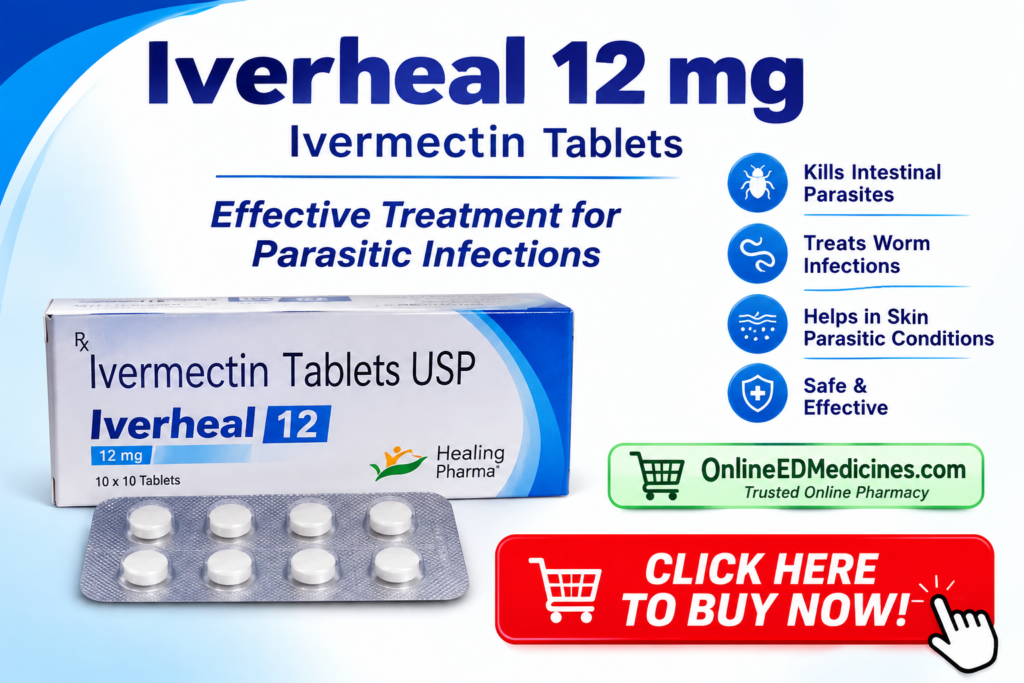
Iverheal 12 mg Treatment: Uses, Benefits, Dosage, Side Effects, and Safety Guide
Introduction
Parasitic infections can affect the intestines, skin, and other parts of the body. Depending on the type of parasite involved, appropriate medical treatment may help eliminate the infection and reduce associated symptoms. Iverheal 12 mg treatment is a topic of interest for people seeking information about ivermectin-based antiparasitic medication.
Iverheal 12 mg contains ivermectin, an antiparasitic medicine used to treat certain infections caused by susceptible parasites. However, it is not suitable for every infection, and the correct treatment plan depends on the diagnosis, body weight, medical history, and other individual factors.
This guide explains Iverheal 12 mg uses, how ivermectin works, important dosage considerations, possible side effects, and precautions to help readers make informed decisions with their healthcare professionals.
Medical disclaimer: This article is for educational purposes only. Iverheal 12 mg should be used only under appropriate medical guidance. It is not a substitute for professional diagnosis or a prescription.
What Is Iverheal 12 mg?
Iverheal 12 mg is an oral tablet containing 12 mg of ivermectin as its active ingredient. Ivermectin belongs to a class of medicines known as antiparasitic agents or anthelmintics.
These medicines work against certain parasites responsible for infections in humans. Ivermectin affects specific nerve and muscle functions in susceptible parasites, causing paralysis and helping eliminate them from the body.
The strength stated in the product name refers to the amount of ivermectin in each tablet. It does not mean that the same dose is appropriate for every person or medical condition.
Before beginning treatment, patients should verify the medicine’s packaging, active ingredient, expiry date, and prescribing instructions with a qualified healthcare professional.
What Is Iverheal 12 mg Treatment Used For?
Ivermectin is used to treat particular parasitic infections. Its suitability depends on the organism responsible for the infection and the patient’s circumstances.
1. Treatment of Strongyloidiasis
Strongyloidiasis is an intestinal infection caused by the parasitic roundworm Strongyloides stercoralis. Some people experience abdominal discomfort, diarrhoea, skin symptoms, or other digestive complaints, while others may have few noticeable symptoms.
Oral ivermectin is an established treatment for this infection. Prompt diagnosis and appropriate treatment are especially important for people with weakened immune systems, because the infection can sometimes become severe.
2. Treatment of Onchocerciasis
Onchocerciasis, also called river blindness, is a parasitic disease caused by Onchocerca volvulus. It can affect the skin and eyes.
Ivermectin helps control the immature forms of the parasite and can reduce disease-related complications. Treatment and follow-up depend on the infection and the recommendations of the treating clinician.
3. Certain Cases of Scabies
Scabies is a contagious skin infestation caused by microscopic mites. It can cause intense itching, particularly at night, along with a rash or small raised bumps.
Oral ivermectin may be prescribed for selected scabies cases. However, it is not automatically the preferred treatment for every patient. Topical medicines may be appropriate, and household contacts may also need evaluation or treatment.
The diagnosis matters because eczema, allergic reactions, fungal infections, and other skin conditions can cause similar symptoms.
4. Certain Lice Infestations
Ivermectin may be used in selected cases of lice infestation, depending on the formulation, local treatment recommendations, and the patient’s circumstances.
Treatment should be selected by a healthcare professional. Patients should not assume that every lice infestation requires oral ivermectin.
Important: Ivermectin does not treat every type of worm, skin rash, or infectious disease. Its use should be based on an appropriate diagnosis.
How Does Iverheal 12 mg Work?
Iverheal 12 mg works through its active ingredient, ivermectin. The medicine interacts with specific chloride channels in susceptible parasites, disrupting normal nerve and muscle activity.
This action can immobilise or kill susceptible parasites, helping the body clear the infection.
The precise response depends on the parasite being treated. Some infections may require follow-up examinations, additional treatment, or other measures to prevent reinfection.
Although ivermectin has established antiparasitic uses, it should not be considered a general-purpose medicine for unexplained itching, digestive symptoms, or viral illnesses.
Iverheal 12 mg Dosage and Treatment Duration
The appropriate Iverheal 12 mg dosage depends on the condition being treated, body weight, age, medical history, and other relevant factors.
A 12 mg tablet is a specific medicine strength, not a universal dose for every infection.
Important dosage considerations
- Follow the exact prescription provided by your healthcare professional.
- Do not increase the dose if symptoms persist.
- Do not repeat treatment without medical advice.
- Ask your doctor or pharmacist about the correct timing and whether the medicine should be taken with or without food.
- If a dose is missed, seek professional advice instead of automatically taking an extra tablet.
- Attend recommended follow-up appointments or testing.
Different parasitic infections can require different dosing schedules. Some treatment plans involve a single administration, while others require a different schedule or follow-up treatment.
The number of tablets and treatment duration should never be determined solely from an online article.
How to Take Iverheal 12 mg Responsibly
If a healthcare professional prescribes Iverheal 12 mg, follow the product-specific instructions carefully.
Swallow the tablet as directed, using water if appropriate. Follow the prescribed instructions regarding food and timing, because recommendations can vary with the product and indication.
Keep the medicine in its original packaging and store it according to the label. Do not share prescription medication with another person, even if their symptoms appear similar.
For conditions such as scabies, medication may not be the only necessary measure. A clinician may recommend treating relevant contacts, washing clothing or bedding appropriately, or taking other steps to limit reinfestation.
If symptoms do not improve within the expected period, contact your healthcare professional. Persistent symptoms may indicate reinfection, an incorrect diagnosis, or the need for additional treatment.
Possible Side Effects of Iverheal 12 mg
Like other medicines, ivermectin can cause side effects. Not everyone experiences them, and the nature of the reaction may depend partly on the infection being treated.
Possible side effects include:
- Nausea or vomiting
- Diarrhoea
- Abdominal discomfort
- Dizziness
- Headache
- Weakness or fatigue
- Itching or skin reactions
Mild symptoms may resolve, but persistent or worsening reactions should be discussed with a healthcare professional.
Serious Side Effects
Seek urgent medical attention if you experience severe confusion, difficulty walking, loss of coordination, seizures, fainting, or loss of consciousness.
A severe allergic reaction may cause swelling of the face, lips, tongue, or throat, or difficulty breathing. These symptoms require emergency medical care.
Do not take additional doses while attempting to manage a potentially serious reaction without medical advice.
Precautions Before Starting Iverheal 12 mg Treatment
Before taking ivermectin, tell your doctor about your health history and all medicines you use.
Pregnancy and breastfeeding
If you are pregnant, planning pregnancy, or breastfeeding, consult a qualified healthcare professional before taking ivermectin. The potential benefits and risks must be assessed for the specific situation.
Liver or other medical conditions
Inform your clinician about liver disease, significant kidney problems, neurological conditions, or other important medical concerns. Your medical history can affect treatment decisions and monitoring requirements.
Other medicines
Provide a complete list of prescription medicines, non-prescription products, vitamins, and supplements. Ivermectin can interact with certain medicines, and your healthcare professional can assess potential risks.
Allergies
Do not use the medicine if you have a known serious allergy to ivermectin or an ingredient in the product unless a qualified clinician has evaluated the situation and advised otherwise.
Children
Treatment for children requires particular care. Dosing must account for the child’s weight, age, diagnosis, and applicable safety recommendations. Do not give an adult-strength tablet to a child without professional guidance.
Can Iverheal 12 mg Treat COVID-19?
Ivermectin should not be used to prevent or treat COVID-19 without an evidence-based medical indication. The US Food and Drug Administration states that ivermectin is not approved or authorised for COVID-19 prevention or treatment.
Iverheal 12 mg is an antiparasitic medicine, not a general antiviral treatment. Claims that it can prevent or cure COVID-19 should not replace established medical advice.
Patients with suspected COVID-19 should follow current clinical recommendations and consult a healthcare professional when necessary.
Tips for Supporting Successful Parasite Treatment
Medication is only one part of managing certain parasitic infections. Depending on the diagnosis, a healthcare professional may recommend additional measures.
- Confirm the diagnosis: Symptoms alone cannot reliably identify the responsible parasite.
- Follow the prescription: Use the prescribed medicine and schedule without making independent changes.
- Maintain appropriate hygiene: Handwashing and safe food and water practices can help prevent some infections.
- Follow condition-specific advice: Scabies and lice may require additional measures to prevent reinfestation.
- Complete recommended follow-up: Some infections need repeat assessment or further treatment.
- Avoid unverified remedies: Do not replace proven treatment with unsupported online claims or veterinary medicines.
These measures can help patients follow a more appropriate and informed treatment plan.
Frequently Asked Questions About Iverheal 12 mg Treatment
1. What is Iverheal 12 mg used for?
Iverheal 12 mg contains ivermectin, which is used for certain parasitic infections. The appropriate indication depends on the diagnosis and local medical recommendations.
2. Is Iverheal 12 mg an antibiotic?
No. Ivermectin is an antiparasitic medicine. It is not an antibiotic and does not treat bacterial infections in the same way as antibacterial medicines.
3. Can I take Iverheal 12 mg without consulting a doctor?
Self-medication is not recommended. A healthcare professional should determine whether ivermectin is appropriate and select the correct treatment plan.
4. How quickly does Iverheal 12 mg work?
The response depends on the infection, the prescribed regimen, and individual factors. Symptom improvement may not occur immediately, and some conditions require follow-up treatment or testing.
5. What should I do if I experience side effects?
Contact a healthcare professional if side effects persist or become concerning. Seek emergency care for difficulty breathing, severe allergic reactions, seizures, fainting, or significant neurological symptoms.
6. Can I take another tablet if symptoms continue?
Do not take an additional tablet without medical advice. Persistent symptoms may require reassessment rather than a higher dose.
7. Is Iverheal 12 mg suitable for every parasitic infection?
No. Ivermectin works against particular parasites and is not effective against every parasitic organism. Correct diagnosis is essential.
Conclusion
Iverheal 12 mg treatment involves the use of ivermectin, an antiparasitic medicine prescribed for certain infections. Its established uses include intestinal strongyloidiasis and onchocerciasis, while other uses may be considered in appropriate clinical circumstances.
Safe treatment requires an accurate diagnosis, an individually appropriate dose, awareness of possible side effects, and adherence to professional instructions. Patients should not self-prescribe, repeat doses without advice, or use ivermectin for unsupported indications.
If you suspect a parasitic infection or have persistent symptoms, consult a qualified healthcare professional to determine the most appropriate treatment.