
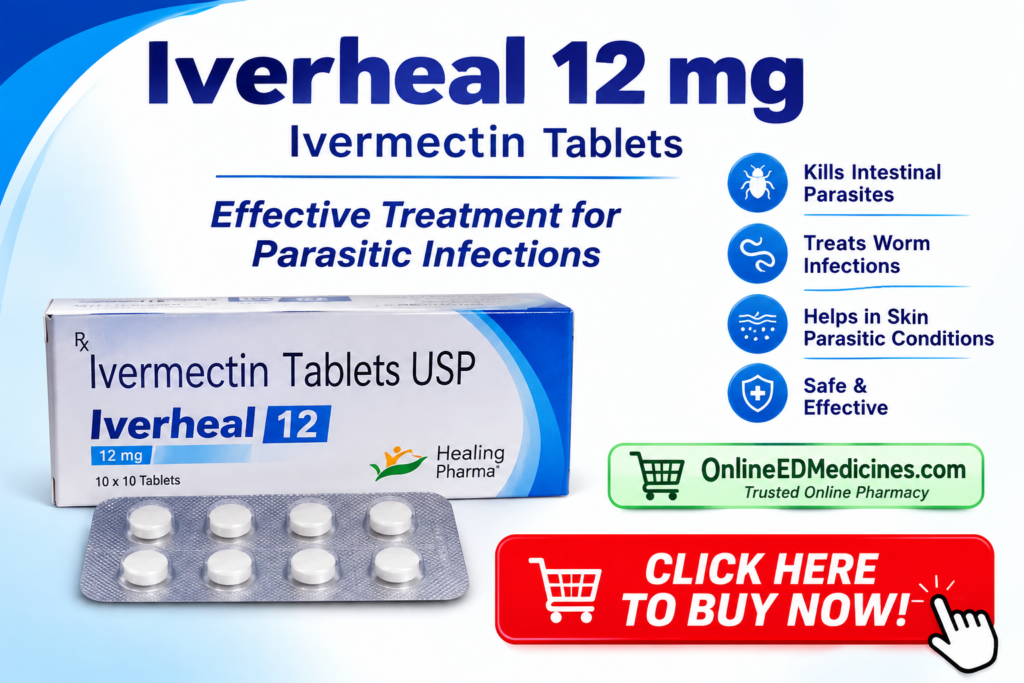
What Is Iverheal 12 Medicine?
Iverheal 12 mg is a tablet containing ivermectin as its active ingredient. Ivermectin belongs to a class of medicines called antiparasitic agents or anthelmintics. These medicines work against susceptible parasites that can cause infections in humans.
Key Information About Iverheal 12
- Brand name: Iverheal 12
- Active ingredient: Ivermectin
- Strength: 12 mg per tablet
- Dosage form: Oral tablet
- Medicine category: Antiparasitic medication
- Primary purpose: Treatment of certain parasitic infections when prescribed by a qualified healthcare professional
Always check the product packaging and accompanying information to verify the formulation, manufacturer, expiry date, and other product-specific details.
What Is Iverheal 12 mg Used For?
Ivermectin is used to treat certain parasitic infections. The exact use of Iverheal 12 depends on the diagnosis and the prescribing clinician’s judgment.
1. Intestinal Strongyloidiasis
Strongyloidiasis is an intestinal infection caused by the parasitic roundworm Strongyloides stercoralis. The infection may cause abdominal discomfort, diarrhea, skin symptoms, or other problems, although some infected individuals experience few noticeable symptoms.
Oral ivermectin is an established treatment for this infection. The clinician determines the appropriate regimen based on the patient’s circumstances and the severity of the condition.
2. Onchocerciasis
Onchocerciasis, sometimes called river blindness, is a parasitic disease caused by Onchocerca volvulus. It can affect the skin and eyes and may lead to serious complications.
Ivermectin helps reduce the number of certain immature forms of the parasite. It does not kill adult Onchocerca volvulus worms, so ongoing medical assessment and follow-up may be necessary.
3. Certain Other Parasitic Conditions
Depending on the diagnosis and local treatment guidance, healthcare professionals may prescribe oral ivermectin for other conditions, including selected cases of scabies.
Scabies is caused by tiny mites that burrow into the skin, producing itching and a rash. Oral ivermectin may be considered in particular circumstances, while topical medicines are also commonly used.
The appropriate treatment depends on factors such as the patient’s age, weight, pregnancy status, severity of infestation, and other medical considerations.
Important: Not every itchy rash, digestive complaint, or suspected worm infection requires ivermectin. Similar symptoms can have different causes, making a proper diagnosis essential.
How Does Iverheal 12 Work?
Iverheal 12 works through its active ingredient, ivermectin. The medicine interacts with specific chloride channels in susceptible parasites, disrupting their nerve and muscle function.
This action can cause paralysis and the death of susceptible parasites or reduce their ability to survive and reproduce. The body can then clear the affected parasites through its normal processes.
Ivermectin’s activity depends on the type of parasite involved. It is not a general-purpose medicine for every infection.
For example, it does not replace antibiotics for bacterial infections or appropriate antiviral medicines for viral illnesses.
Iverheal 12 Dosage: What Should You Know?
The correct Iverheal 12 dosage depends on the infection being treated and the individual patient’s medical circumstances. There is no single dosage schedule suitable for everyone.
A healthcare professional may consider:
- The patient’s body weight and age.
- The type of parasite and confirmed diagnosis.
- The severity of the infection.
- Previous treatments and response to medication.
- Pregnancy or breastfeeding status.
- Other medicines and relevant medical conditions.
Some ivermectin treatments involve a single administration, while other conditions may require additional doses or follow-up treatment. The regimen for one infection should never be applied automatically to another.
How to Take Iverheal 12 Safely
If Iverheal 12 has been prescribed to you:
- Follow the prescribed dose and timing.
- Read the medicine label and follow the instructions regarding food.
- Do not take extra tablets if symptoms persist.
- Do not repeat a dose unless instructed by your healthcare professional.
- Tell your clinician about prescription medicines, nonprescription products, and supplements you use.
- Seek medical advice if your symptoms worsen or fail to improve as expected.
Never use someone else’s prescription or select a dose simply because a tablet strength appears suitable.
Iverheal 12 Side Effects
Like other medicines, ivermectin can cause side effects. Their likelihood and severity depend on factors such as the dose, underlying infection, and individual response.
Possible side effects include:
- Nausea.
- Diarrhea.
- Dizziness.
- Vomiting.
- Abdominal discomfort.
- Weakness or fatigue.
Some reactions occurring during treatment of particular parasitic diseases may also result from the body’s response to dying parasites rather than from the medicine alone.
Mild symptoms should be discussed with a healthcare professional if they persist, become troublesome, or concern you.
Serious Side Effects Requiring Medical Attention
Although serious reactions are less common, they can occur. Seek urgent medical care if you experience:
- Severe allergic reactions, including swelling of the face or throat or difficulty breathing.
- Extensive rash, blistering, or peeling skin.
- Significant confusion or unusual drowsiness.
- Difficulty walking, severe loss of coordination, or altered consciousness.
- Seizures or fainting.
Taking excessive amounts of ivermectin can cause serious toxicity. If an overdose is suspected, seek emergency medical assistance rather than waiting for symptoms to develop.
Precautions Before Using Iverheal 12
Before taking Iverheal 12 mg, discuss your medical history with a qualified healthcare professional.
Pregnancy and Breastfeeding
If you are pregnant, planning pregnancy, or breastfeeding, consult your clinician before using ivermectin. The decision requires consideration of the potential benefits, risks, and available alternatives.
Do not start treatment without appropriate medical advice.
Liver or Other Health Conditions
Tell your healthcare professional about significant medical conditions, previous medication reactions, and any history that could affect treatment.
Your clinician can determine whether additional precautions or monitoring are appropriate.
Children and Older Adults
Children require particular care because medication selection and dosing may depend on body weight, age, and the condition being treated.
Older adults may also need an individualized assessment based on their medical history and other medicines.
Do not divide or adjust a tablet to create a different dose unless a healthcare professional has confirmed that this is appropriate.
Allergies
Avoid ivermectin if you have a known serious allergy to it or an ingredient in the product. Check the packaging or ask a pharmacist if you are uncertain about the tablet’s ingredients.
Drug Interactions and Other Medicines
Ivermectin may interact with certain medicines. For example, the US Food and Drug Administration notes that interactions with blood-thinning medicines may be relevant.
Before treatment, provide your clinician with an accurate list of all prescription medicines, over-the-counter products, vitamins, and herbal supplements you use.
Do not stop an existing medicine or change its dose without professional guidance.
A pharmacist or prescribing clinician can assess whether your current medicines require additional precautions or monitoring.
Is Iverheal 12 Effective for Every Infection?
No. Ivermectin acts against susceptible parasites, but it is not effective against every organism that causes illness.
Its effectiveness depends on the diagnosis, the parasite involved, and whether the prescribed treatment is appropriate.
Ivermectin should not be used to prevent or treat COVID-19 without an evidence-based, authorized indication. The FDA states that available evidence does not establish ivermectin as an effective treatment or preventive medicine for COVID-19.
Animal ivermectin products must never be substituted for medicines intended for human use. Veterinary formulations can differ in concentration and composition and may cause serious harm.
Storage and Handling Guidelines
Store Iverheal 12 according to the instructions on its packaging. General medicine-storage precautions include:
- Keep tablets in their original packaging when appropriate.
- Store the medicine away from excessive heat and moisture.
- Keep it out of the reach of children and pets.
- Check the expiry date before use.
- Do not use tablets that appear damaged or whose packaging has been compromised.
- Ask a pharmacist how to dispose of unused or expired medicine safely.
Follow any specific storage instructions supplied with the product.
Frequently Asked Questions About Iverheal 12 Medicine Information
1. What is Iverheal 12 mg used for?
Iverheal 12 contains ivermectin, an antiparasitic medicine used for certain parasitic infections. The appropriate indication depends on the diagnosis and a healthcare professional’s recommendation.
2. Is Iverheal 12 an antibiotic?
No. Ivermectin is an antiparasitic medicine, not an antibiotic. Antibiotics are used to treat susceptible bacterial infections, whereas ivermectin targets certain parasites.
3. Can I take Iverheal 12 every day?
Do not take Iverheal 12 daily unless your healthcare professional has specifically prescribed that schedule. The correct regimen varies according to the condition being treated.
4. What are the common side effects of Iverheal 12?
Possible side effects include nausea, diarrhea, dizziness, vomiting, and abdominal discomfort. Seek medical advice for persistent or severe symptoms and urgent care for signs of a serious reaction.
5. Can I use Iverheal 12 for itching?
Itching can result from scabies, allergies, eczema, and numerous other conditions. Ivermectin may be appropriate for certain diagnosed parasitic conditions, but unexplained itching should not automatically be treated with this medicine.
6. Can I take Iverheal 12 without a prescription?
Self-treatment is not recommended. A qualified healthcare professional should determine whether ivermectin is appropriate and identify the correct treatment regimen. Follow applicable local prescription requirements.
7. Does Iverheal 12 treat viral infections?
Ivermectin is primarily an antiparasitic medicine. It should not be assumed to treat viral illnesses, including COVID-19, on the basis of unsupported claims.
Conclusion
Iverheal 12 medicine information is important for anyone seeking to understand this ivermectin-containing tablet. The medicine has established uses against certain parasitic infections, but its suitability, dosage, and treatment schedule depend on the specific diagnosis and the patient’s circumstances.
Understanding its possible side effects, drug interactions, precautions, and storage requirements can support safer medicine use. Avoid self-prescribing, taking extra doses, or using veterinary products intended for animals.
For accurate guidance, consult a qualified healthcare professional and follow the instructions provided with your prescribed medicine.
Medical disclaimer: This article is for general educational purposes only. It does not replace professional medical advice, diagnosis, or treatment. Always consult a qualified healthcare professional before starting or changing medication.