
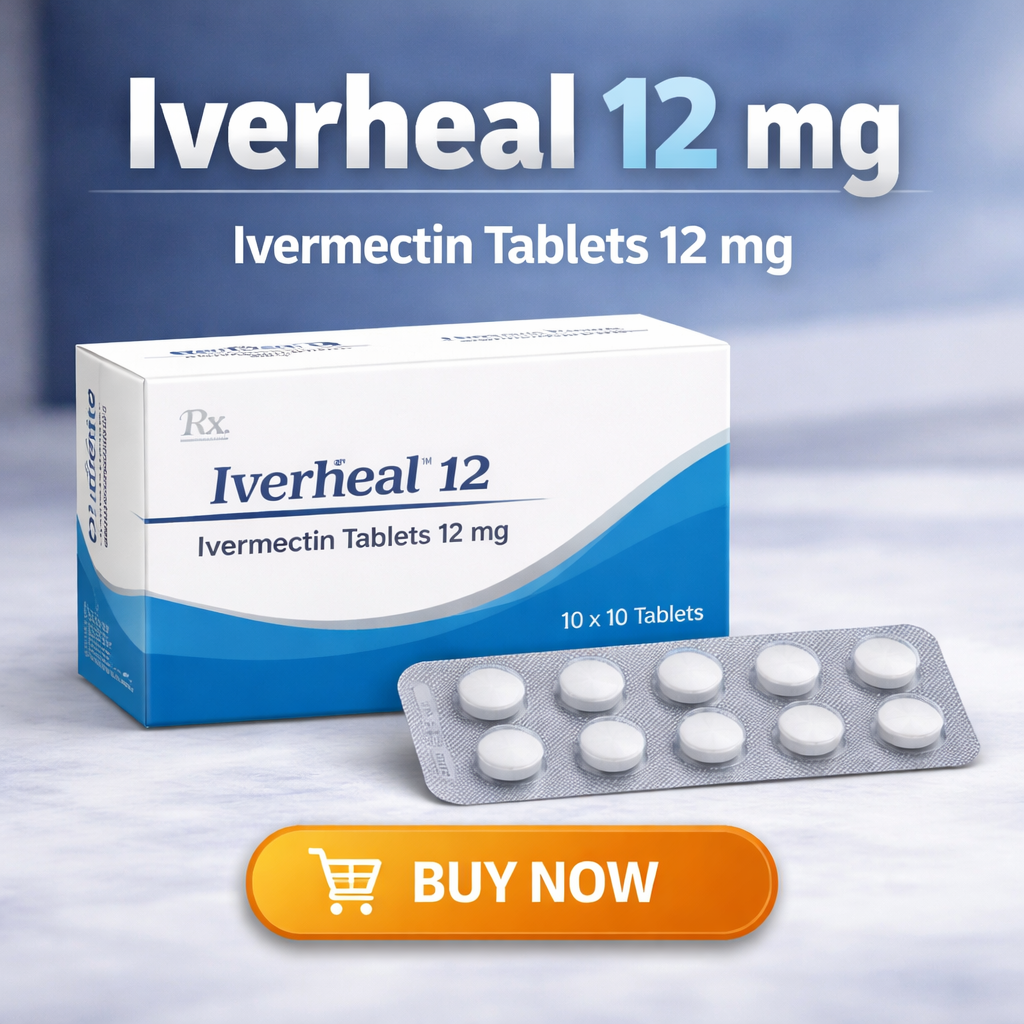
Iverheal 12 is a brand name for a medication containing ivermectin at a strength of 12 mg per tablet. Ivermectin is an antiparasitic agent originally developed for veterinary use and later adopted for human medicine. It is used to treat a variety of parasitic infections, and more recently, it has garnered attention for controversial off-label uses, most notably during the COVID-19 pandemic.
1. Introduction to Iverheal 12
Iverheal 12 is a pharmaceutical product manufactured by various companies, commonly found in markets such as India. The “12” refers to the dosage strength of 12 mg of ivermectin per tablet. It is used to treat several parasitic infections in humans.
2. What is Ivermectin?
Ivermectin is a broad-spectrum antiparasitic agent. It has been used worldwide to treat a range of parasitic infections, both in humans and animals. It is structurally derived from avermectins, which are isolated from the bacterium Streptomyces avermitilis.
3. History and Development
Ivermectin was discovered in the late 1970s by Satoshi Ōmura and William C. Campbell. It revolutionized the treatment of several parasitic diseases. The discovery and use of ivermectin have been recognized by the Nobel Prize in Physiology or Medicine in 2015.
4. Mechanism of Action
Ivermectin works by binding to glutamate-gated chloride channels in the nerve and muscle cells of invertebrates, causing paralysis and death of the parasite. In humans, these channels are not present, and ivermectin does not cross the blood-brain barrier at normal doses, making it safe for use.
5. Medical Uses
a. Approved Uses
- Onchocerciasis (River Blindness): Ivermectin is the drug of choice for treating onchocerciasis, a disease caused by the parasite Onchocerca volvulus.
- Strongyloidiasis: It is effective against Strongyloides stercoralis, a roundworm that infects the gut.
- Lymphatic Filariasis: Used in mass drug administration programs to eliminate filarial parasites.
- Scabies and Head Lice: Sometimes used to treat skin infestations when topical treatments fail or are impractical.
b. Off-Label and Investigational Uses
- Other Parasitic Infections: Such as cutaneous larva migrans, gnathostomiasis, loiasis (with caution), and trichuriasis.
- COVID-19: Ivermectin has been used off-label for COVID-19, but major health authorities (FDA, WHO, EMA) do not recommend it due to lack of sufficient evidence.
6. Dosage and Administration
Iverheal 12 is typically administered as a single dose of 12 mg, depending on the condition being treated, patient weight, and local guidelines. Dosage regimens may vary for different diseases.
7. Side Effects and Safety
Common side effects include dizziness, nausea, diarrhea, fatigue, abdominal pain, and rash. Serious adverse reactions are rare but can include severe allergic reactions and neurotoxicity, especially in cases of overdose or in patients with certain infections like loiasis.
8. Contraindications and Precautions
- Hypersensitivity: Contraindicated in patients with known hypersensitivity to ivermectin.
- Children and Pregnant Women: Use with caution; consult health authorities for guidance.
- Co-Infections: Special precautions in patients with loiasis due to risk of severe adverse reactions.
9. Ivermectin in Veterinary Medicine
Ivermectin remains a mainstay in veterinary medicine for the treatment and prevention of heartworm, mange, and other parasitic infections in animals such as dogs, horses, and livestock. Veterinary formulations are not safe for human use due to differing concentrations and inactive ingredients.
10. Ivermectin and COVID-19
During the COVID-19 pandemic, ivermectin gained attention as a potential treatment or prophylactic agent. Initial in vitro studies suggested possible antiviral activity, but clinical trials have not shown consistent benefit. Health authorities do not recommend its use for COVID-19 outside of clinical trials.
11. Iverheal 12: Brand Overview
Iverheal 12 is produced primarily for markets where parasitic diseases are endemic. It is typically available by prescription and should be used under medical supervision. The tablet contains 12 mg of ivermectin and is intended for oral administration.
12. Legal and Regulatory Status
Ivermectin is on the WHO List of Essential Medicines. Its regulatory status varies by country, with some requiring a prescription and others allowing over-the-counter sales.
13. Global Use and Access
Ivermectin has been distributed globally, often as part of mass treatment campaigns for neglected tropical diseases. Access in low-income countries has been vital in reducing the burden of certain parasitic diseases.
14. Controversies and Misinformation
The use of ivermectin for COVID-19 has led to significant misinformation, with some advocating unapproved veterinary products for human use, leading to poisonings and shortages for patients with approved indications.
15. Research and Future Directions
Ongoing research continues to explore ivermectin’s efficacy against various pathogens and its potential role in new therapeutic areas. Drug resistance remains a concern, especially in veterinary contexts.
16. Conclusion
Iverheal 12 is a valuable medication for the treatment of several parasitic infections. While it is safe and effective when used as directed, unapproved uses—especially for COVID-19—should be approached with caution. Always consult a healthcare professional before using any medication.