
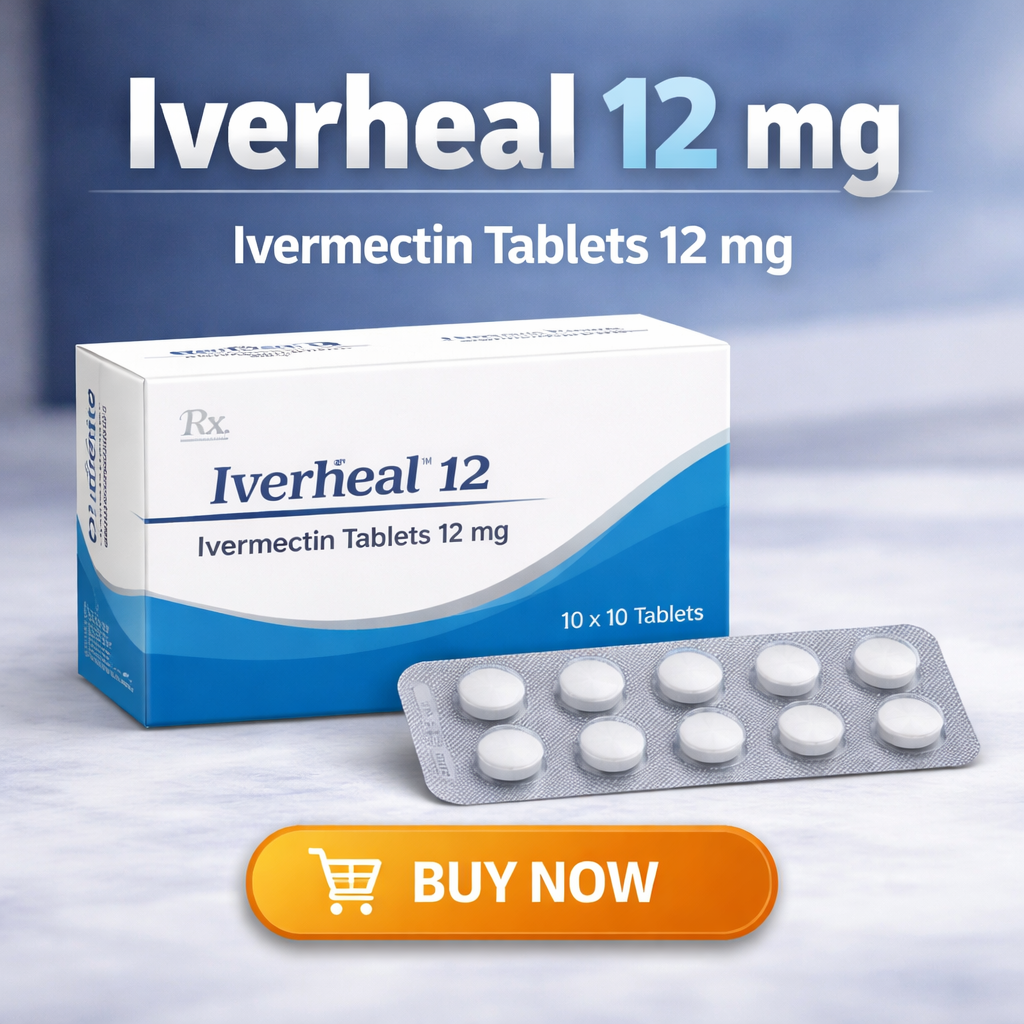
Iverheal 12 mg is a pharmaceutical product used to treat a variety of parasitic infections. Its active ingredient, ivermectin, has dramatically improved global health by helping control and eliminate certain neglected tropical diseases. The medication is available as a tablet, with the “12 mg” indicating the amount of ivermectin per tablet.
What is Iverheal 12 mg?
Iverheal 12 mg is an oral medication manufactured by several pharmaceutical companies, particularly in India. It is available by prescription in many countries and typically comes in blister packs. The primary indication is for the treatment of parasitic infections, with dosing tailored according to body weight and the type of infection.
Ivermectin: The Active Ingredient
Chemical Properties
- Class: Avermectin derivative (macrocyclic lactone)
- Molecular Formula: C<sub>48</sub>H<sub>74</sub>O<sub>14</sub>
- Mechanism: Binds to glutamate-gated chloride ion channels in nerve and muscle cells of parasites.
History and Discovery
Discovered in the late 1970s, ivermectin was developed through a collaboration between Japanese microbiologist Satoshi Ōmura and American parasitologist William Campbell. The drug revolutionized the treatment of several parasitic diseases, earning Ōmura and Campbell the Nobel Prize in Physiology or Medicine in 2015.
Pharmacology
Mechanism of Action
Ivermectin binds selectively and with high affinity to glutamate-gated chloride channels, which are specific to invertebrates. This causes paralysis and death of the parasite. Humans are generally unaffected at therapeutic doses because these channels are not present and the drug does not cross the blood-brain barrier easily.
Pharmacokinetics and Pharmacodynamics
- Absorption: Moderate oral bioavailability, enhanced with fatty meals.
- Distribution: High tissue distribution, does not readily cross the human blood-brain barrier.
- Metabolism: Hepatic, mainly CYP3A4.
- Excretion: Primarily fecal.
Approved Clinical Uses
Onchocerciasis (River Blindness)
Caused by Onchocerca volvulus, onchocerciasis is a leading cause of preventable blindness in sub-Saharan Africa. Ivermectin is the drug of choice for mass administration programs to reduce transmission and disease burden.
Strongyloidiasis
A potentially life-threatening infection, especially in immunocompromised patients. Ivermectin is preferred for its efficacy and safety.
Scabies
Oral ivermectin is used for severe or crusted scabies or when topical therapies are not feasible.
Lymphatic Filariasis
Used in combination therapy (with albendazole or diethylcarbamazine) for mass treatment programs to eliminate lymphatic filariasis.
Other Parasitic Diseases
Includes treatment for cutaneous larva migrans, trichuriasis, loiasis (with caution), gnathostomiasis, and pediculosis (lice).
Dosage and Administration
Standard Dosing Guidelines
- Onchocerciasis: 150 mcg/kg as a single dose, repeated every 6–12 months.
- Strongyloidiasis: 200 mcg/kg as a single dose, sometimes repeated after 2 weeks.
- Scabies: 200 mcg/kg, repeated after 7–14 days if needed.
Special Populations
- Not recommended for children under 15 kg or below 5 years old.
- Caution advised in elderly, pregnant, or lactating women.
Safety Profile
Common Side Effects
- Nausea, vomiting, diarrhea
- Dizziness, tiredness
- Itching, rash
Serious Adverse Reactions
- Hypersensitivity reactions
- Mazzotti reaction (inflammatory response to dying parasites)
- Rare neurotoxicity in overdose or predisposed individuals
Contraindications and Precautions
- Hypersensitivity to ivermectin
- CNS disorders
- Liver dysfunction
Drug Interactions
- Warfarin (potentiation of effect)
- CYP3A4 inhibitors/inducers may alter ivermectin levels
Ivermectin in Veterinary Medicine
Ivermectin is widely used in animals for the prevention and treatment of heartworm, mange, and other parasitic infections. Veterinary formulations are NOT intended for human use and may contain inappropriate excipients or concentrations.
Iverheal 12 mg in the Context of COVID-19
Early Laboratory Studies
In vitro studies suggested ivermectin could inhibit SARS-CoV-2 replication, but the concentrations required were much higher than those achievable in humans.
Public Use and Misinformation
Widespread off-label use for COVID-19 occurred, fueled by anecdotal evidence and misinformation, leading to shortages and cases of toxicity.
Regulatory Warnings
- FDA, EMA, WHO: Strongly advise against use for COVID-19 outside clinical trials.
- Poison Control Centers: Reported increased cases of ivermectin overdose.
Summary of Clinical Evidence
Most well-conducted clinical trials have found no significant benefit of ivermectin for COVID-19 treatment or prevention.
Legal and Regulatory Status
- Prescription status varies by country.
- Over-the-counter sales in some regions, especially for veterinary formulations.
- Counterfeit and substandard products are a concern in markets with poor regulation.
Global Health Impact
Mass Drug Administration Campaigns
Ivermectin has been the cornerstone of programs to control and eliminate river blindness and lymphatic filariasis, treating millions annually.
Role in Neglected Tropical Diseases
Recognized by the WHO as an essential medicine, ivermectin has transformed the management of certain neglected tropical diseases.
Access, Distribution, and Quality Concerns
- Donation programs (e.g., Merck’s Mectizan Donation Program) have greatly increased global access.
- Quality assurance remains a challenge, with counterfeit products posing risks to public health.
Controversies and Societal Impact
- COVID-19 misinformation undermined trust in public health guidance.
- Off-label and unsupervised use led to preventable toxicities and drug shortages.
- Ethical dilemmas: Balancing access with the need for evidence-based use.
Future Prospects and Research
- Ongoing studies are exploring ivermectin’s antiviral, anti-inflammatory, and anticancer properties.
- Drug resistance in parasites is an emerging concern.
- Improved formulations and combination therapies are under investigation.
Conclusion
Iverheal 12 mg (ivermectin 12 mg) is a safe and effective antiparasitic medication when used appropriately. Its global health legacy is immense, but recent controversies highlight the importance of evidence-based medicine and responsible use.