
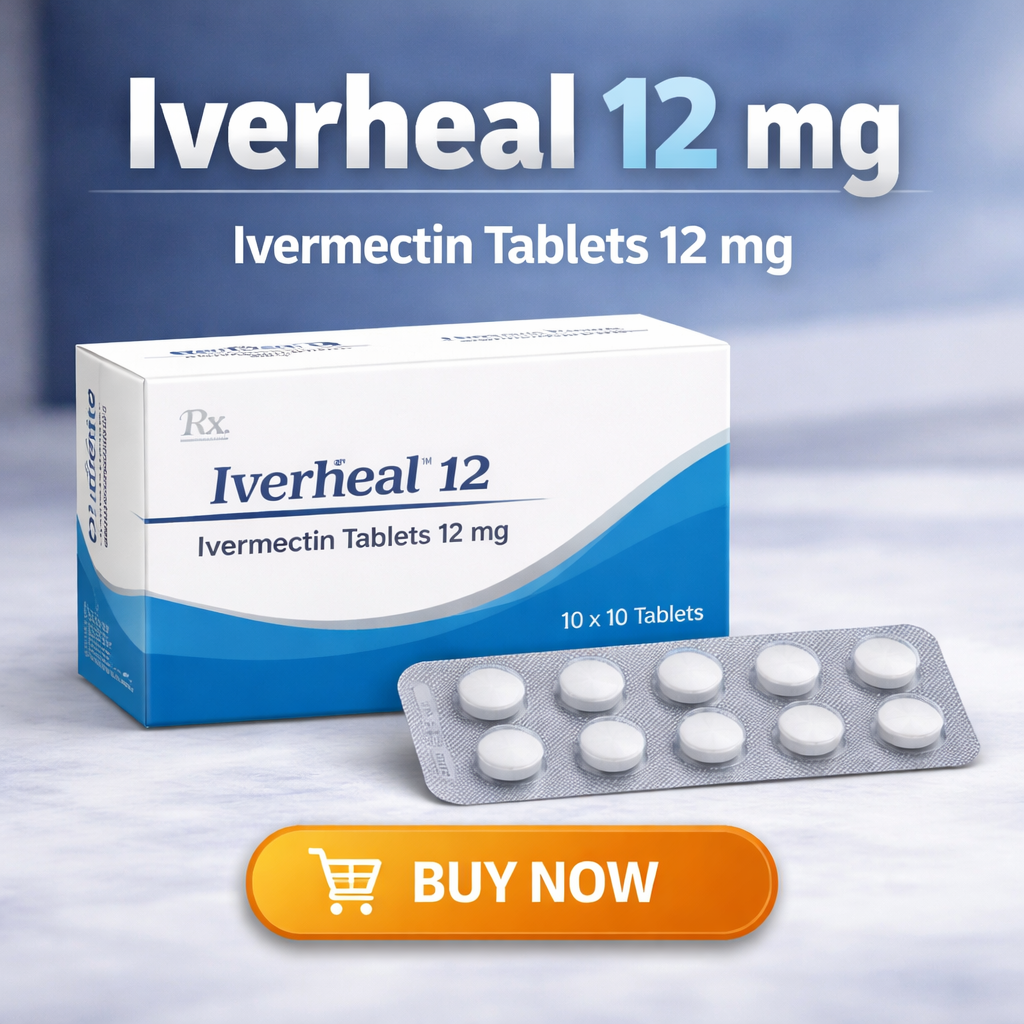
Iverheal 12mg:
Iverheal 12mg has become a cornerstone in the treatment of various parasitic infections worldwide. Containing the active ingredient Ivermectin, this medication is part of the anthelmintic family—a group of drugs dedicated to eradicating internal and external parasites.
1. How Iverheal Works
The effectiveness of Iverheal lies in its ability to target the nervous system of parasites without harming the human host.
- Binding to Chloride Channels: Ivermectin binds specifically and with high affinity to glutamate-gated chloride channels. These channels are found in the nerve and muscle cells of invertebrates (parasites).
- Inducing Paralysis: This binding increases the permeability of the cell membrane to chloride ions. The resulting “hyperpolarization” leads to flaccid paralysis of the parasite’s muscles.
- Elimination: Unable to move, feed, or reproduce, the parasites are eventually killed or flushed out of the body by the host’s natural processes.
- The Human Safety Shield: In humans, these specific channels are located only in the Central Nervous System (CNS). The blood-brain barrier prevents Ivermectin from crossing over, which is why it is selectively toxic to parasites but safe for people when taken at the correct dosage.
2. Primary Medical Uses
Iverheal 12mg is versatile, treating a wide array of conditions:
- Intestinal Strongyloidiasis: A roundworm infection that can persist for decades if untreated.
- Onchocerciasis (River Blindness): A tropical disease that can lead to severe skin disfigurement and permanent vision loss.
- Scabies: Iverheal is an effective oral alternative for severe or “crusted” scabies when topical creams fail.
- Lymphatic Filariasis: Often used in global health programs to prevent the swelling and skin thickening known as elephantiasis.
3. Dosage and Administration Protocol
Proper administration is the most critical factor in treatment success.
| Patient Weight (kg) | Typical Single Dose |
| 15–24 kg | 3 mg (1/4 tablet) |
| 25–35 kg | 6 mg (1/2 tablet) |
| 36–50 kg | 9 mg (3/4 tablet) |
| 51–65 kg | 12 mg (1 full tablet) |
| 66–79 kg | 15 mg (1.25 tablets) |
| 80+ kg | 200 mcg per kg of body weight |
Best Practices for Consumption:
- The Empty Stomach Rule: Always take Iverheal with a full glass of water at least 1 hour before or 2 hours after a meal. Food can significantly alter the absorption rate.
- No Crushing: Swallow the tablet whole. Do not chew or break it unless specifically instructed for a child.
- The “Repeat” Dose: For conditions like scabies, a second dose is often required 7–14 days later to kill any newly hatched larvae.
4. Side Effects and Precautions
While generally well-tolerated, Iverheal can cause temporary reactions as the body reacts to the dying parasites.
Common Side Effects
- Dizziness or Vertigo
- Nausea and Diarrhea
- Mild skin rash or itching
- Muscle or joint pain
The Mazzotti Reaction
In patients being treated for River Blindness, a specific reaction called the Mazzotti Reaction may occur. This is not a drug allergy, but rather the body’s immune response to the sudden death of millions of microfilariae (larvae). Symptoms include fever, hives, and swollen lymph nodes.
Crucial Warnings
- Avoid Alcohol: Alcohol can exacerbate dizziness and other neurological side effects.
- Pregnancy: Iverheal is typically not recommended during pregnancy (FDA Category C) unless the benefits clearly outweigh the risks.
- Drug Interactions: Inform your doctor if you take Warfarin (blood thinners) or medications that affect the central nervous system, such as benzodiazepines.
5. Frequently Asked Questions
- How fast does Iverheal work? While it begins killing parasites within hours, it may take several days for symptoms like itching or digestive issues to fully resolve.
- Do I need a prescription? Yes. Because it is a potent medication with specific contraindications, it should only be taken under medical supervision.
- Is it effective for head lice? Yes, Iverheal is often used off-label as a highly effective oral treatment for persistent head lice infestations.