
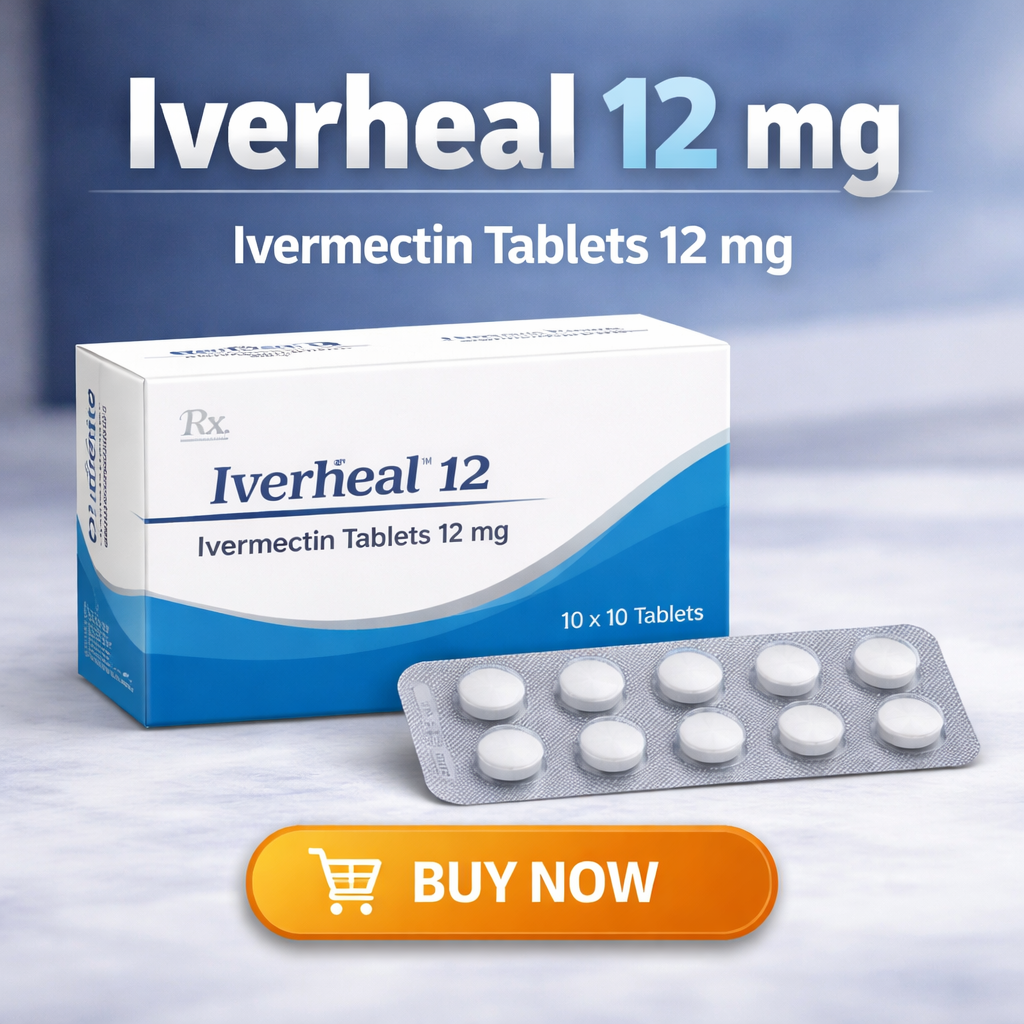
Iverheal 12 mg is a brand of ivermectin, an antiparasitic medication used to treat infections like strongyloidiasis, onchocerciasis (river blindness), scabies, and lice. It is on the World Health Organization’s list of essential medicines and has been widely used for decades under proper medical supervision.
1. How It Works
Ivermectin attaches to glutamate‑gated chloride channels in the parasite’s nerve and muscle cells, increasing chloride ion permeability. This leads to paralysis and death of the parasite without harming human nerve cells, as humans lack these channels.
2. Approved Uses
Doctors prescribe Iverheal 12 mg for:
- Intestinal strongyloidiasis (threadworm infection)
- Onchocerciasis (river blindness due to Onchocerca volvulus)
- Scabies and lice infestations
- Some other filarial or nematode infections after evaluation
These uses are approved and backed by medical data. Self‑medication is discouraged.
3. Dosage and Administration
- Typical adult dose: one 12 mg tablet, taken as a single dose on an empty stomach (1 hour before or 2 hours after food).
- Some conditions (like scabies) may require a second dose in 7–14 days.
- Dosage depends on body weight and infection type—always doctor‑directed.
4. Common Side Effects
According to webmd.com and manufacturer data, common reactions include:
- Dizziness or drowsiness
- Nausea, diarrhea, or mild abdominal pain
- Itching, rash, or mild swelling (especially during scabies treatment due to parasite die‑off)
- Fast heartbeat or slight fever
These effects are generally mild and temporary.
5. Serious Reactions (Rare)
Seek medical help immediately if you experience:
- Allergic reactions: swelling of face, lips, or throat, difficulty breathing
- Neurological effects: confusion, severe dizziness, or disorientation
- Eye or skin swelling in people with Onchocerca infections (which can result from immune reaction to dying parasites)
6. Safety Considerations
| Group | Safety Notes |
|---|---|
| Pregnancy | Use only if prescribed. Limited data; avoid self‑use. iverheal12.com |
| Breastfeeding | Small drug amounts appear in breast milk; physician guidance required. |
| Children | Usually safe above 15 kg (33 lb); not recommended below this weight. |
| Elderly | Generally well tolerated but dosage should be individualized. |
| Liver or immune disorders | Needs close monitoring by a doctor. |
7. Drug Interactions
Using ivermectin with alcohol, barbiturates, benzodiazepines, or other CNS depressants may increase side effects like dizziness or low alertness.
8. Contraindications
Avoid Iverheal 12 mg if you have:
- Known allergy to ivermectin or its ingredients
- Certain parasitic infections such as Loa loa (which can cause severe brain inflammation under ivermectin treatment)
- Serious liver disease, unless supervised medically
9. Risk of Misuse
Although ivermectin gained controversial attention during the COVID‑19 pandemic, scientific reviews and the World Health Organization state that it is not approved nor sufficiently proven for viral diseases. It should be used strictly for its antiparasitic purposes under prescription.
10. Safety Summary
When prescribed and taken correctly under medical direction:
- Iverheal 12 mg is considered safe.
- Risks = low for most healthy adults.
- Overdose or unsupervised use = serious danger, including neurological toxicity.
Bottom Line
Iverheal 12 mg (ivermectin) is a well‑established, effective, and safe antiparasitic medication when used correctly.
It becomes unsafe when:
- Taken without medical evaluation
- Used for unapproved diseases
- Taken in wrong dosage or with contraindicated drugs
If your interest is primarily about safety for a specific infection, age group, or concurrent medication, I can expand on that.