
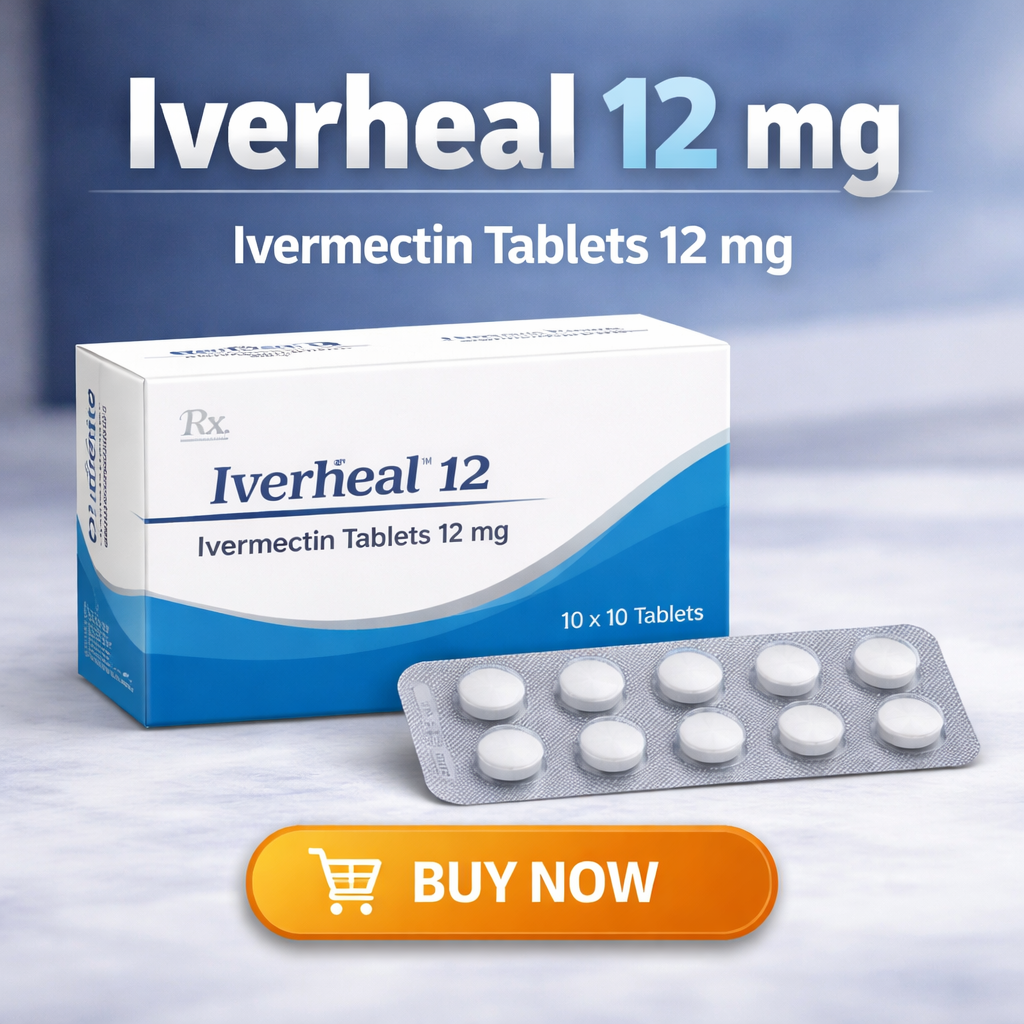
Iverheal 12 is a widely used antiparasitic medication that contains ivermectin (12 mg) as its active ingredient. It is commonly prescribed to treat a variety of parasitic infections affecting the intestines, skin, and other parts of the body.
Understanding how Iverheal 12 works requires diving into its mechanism at the cellular level, how it affects parasites, and why it is effective while remaining relatively safe for humans.
What Is Iverheal 12?
Iverheal 12 is an oral medication belonging to the anthelmintic (anti-parasitic) drug class. It is mainly used to treat:
- Intestinal strongyloidiasis
- Onchocerciasis (river blindness)
- Scabies
- Head lice
- Other parasitic worm infections
The active compound ivermectin was originally derived from bacteria called Streptomyces avermitilis.
The Science Behind Parasitic Infections
To understand how Iverheal 12 works, you need to know how parasites survive in the human body.
Parasites:
- Feed on nutrients from the host
- Reproduce inside the body
- Use the nervous system to move and survive
Their survival depends heavily on nerve and muscle function, which is exactly where ivermectin acts.
Mechanism of Action – How Iverheal 12 Works
Targeting the Parasite’s Nervous System
The primary action of ivermectin is on the parasite’s nervous system.
It binds to:
- Glutamate-gated chloride channels
These channels are:
- Found in parasites (worms, mites)
- Not present in humans in the same way
Opening Chloride Channels
Once ivermectin binds:
- Chloride ions (Cl⁻) flood into parasite cells
- This causes hyperpolarization of nerve and muscle cells
Paralysis of the Parasite
Due to hyperpolarization:
- Nerve signals stop functioning
- Muscles become inactive
Result:
👉 The parasite becomes paralyzed
Death of the Parasite
Once paralyzed:
- Parasites cannot feed
- Cannot reproduce
- Cannot attach to host tissues
Eventually:
👉 They die naturally and are removed by the body
Why Iverheal 12 Is Safe for Humans
One important question:
Why doesn’t ivermectin harm human nerves?
Blood-Brain Barrier Protection
Humans have a protective system called the blood-brain barrier, which:
- Prevents ivermectin from reaching the brain in normal doses
- Keeps human nerve cells safe
Different Receptor Structure
- Human nerve cells do NOT rely on glutamate-gated chloride channels
- Instead, they use different neurotransmitters
👉 This makes ivermectin highly selective for parasites
Step-by-Step Action in the Body
Here’s what happens after taking Iverheal 12:
Step 1: Absorption
- Taken orally on an empty stomach
- Absorbed into the bloodstream
Step 2: Distribution
- Travels throughout the body
- Reaches infected tissues
Step 3: Binding to Parasites
- Attaches to parasite nerve cells
Step 4: Paralysis
- Stops movement and reproduction
Step 5: Elimination
- Dead parasites are cleared through:
- Stool
- Immune system
Conditions Treated by Iverheal 12
Intestinal Worm Infections
- Strongyloides stercoralis
- Roundworms
Skin Conditions
- Scabies (mites under skin)
- Lice (hair infestation)
Eye Infections
- River blindness (Onchocerciasis)
How Fast Does Iverheal 12 Work?
- Within hours: Begins affecting parasites
- 1–2 days: Paralysis begins
- Few days to weeks: Symptoms improve
For skin conditions:
- It may take 1–2 weeks for visible improvement
Pharmacokinetics (Deep Explanation)
Absorption
- Better absorbed on an empty stomach
- Fatty meals may increase absorption
Half-Life
- Around 12–36 hours
Metabolism
- Processed in the liver
Excretion
- Mainly through feces
Dosage Mechanism Explained
Dosage depends on:
- Body weight
- Type of infection
- Severity
Typical rule:
👉 200 mcg per kg body weight
For Iverheal 12:
- Usually a single tablet dose or repeated after 7–14 days
Resistance – Can Parasites Become Resistant?
Yes, but rarely in humans.
Resistance occurs when:
- Parasites adapt their nervous system
- Drug no longer binds effectively
This is more common in:
- Veterinary use
Benefits of Iverheal 12
- Broad-spectrum antiparasitic
- Fast-acting
- Easy oral dosage
- High safety margin
Possible Side Effects
Although generally safe, side effects may occur:
Common:
- Headache
- Dizziness
- Nausea
- Diarrhea
Due to parasite death:
- Fever
- Skin itching
- Swelling
Special Reaction – Mazzotti Reaction
Occurs in some infections (like river blindness):
Symptoms:
- Rash
- Fever
- Joint pain
Cause:
👉 Immune reaction to dying parasites
Who Should Avoid Iverheal 12?
Avoid or consult a doctor if:
- Pregnant or breastfeeding
- Liver disease
- Weak immune system
- Children under specific weight
Drug Interactions
Be cautious with:
- Blood thinners
- Sedatives
- Other antiparasitic drugs
Proper Usage Guidelines
- Take on an empty stomach
- Drink with water
- Follow exact prescription
- Do not self-medicate repeatedly
Myths vs Facts
Myth: It kills parasites instantly
👉 Fact: It paralyzes them first
Myth: It works for all infections
👉 Fact: Only effective for specific parasites
Myth: Higher dose = faster cure
👉 Fact: Can cause toxicity
Comparison with Other Antiparasitic Drugs
| Drug | Mechanism | Use |
|---|---|---|
| Ivermectin | Paralysis via chloride channels | Broad |
| Albendazole | Blocks glucose uptake | Worms |
| Permethrin | Neurotoxin (topical) | Scabies |
Real-World Effectiveness
Iverheal 12 has:
- High cure rates
- Low relapse rates
- Global use in parasite control programs
It has even been used in mass drug administration campaigns in many countries.
Conclusion
Iverheal 12 works through a highly targeted neurological mechanism that disables parasites without harming human cells.
In simple terms:
- It attacks parasite nerves
- Causes paralysis
- Leads to death and elimination
Its effectiveness, safety, and broad application make it one of the most important antiparasitic medicines available today.